
Compassion for Your Enemies
Plenty of material for this one right now

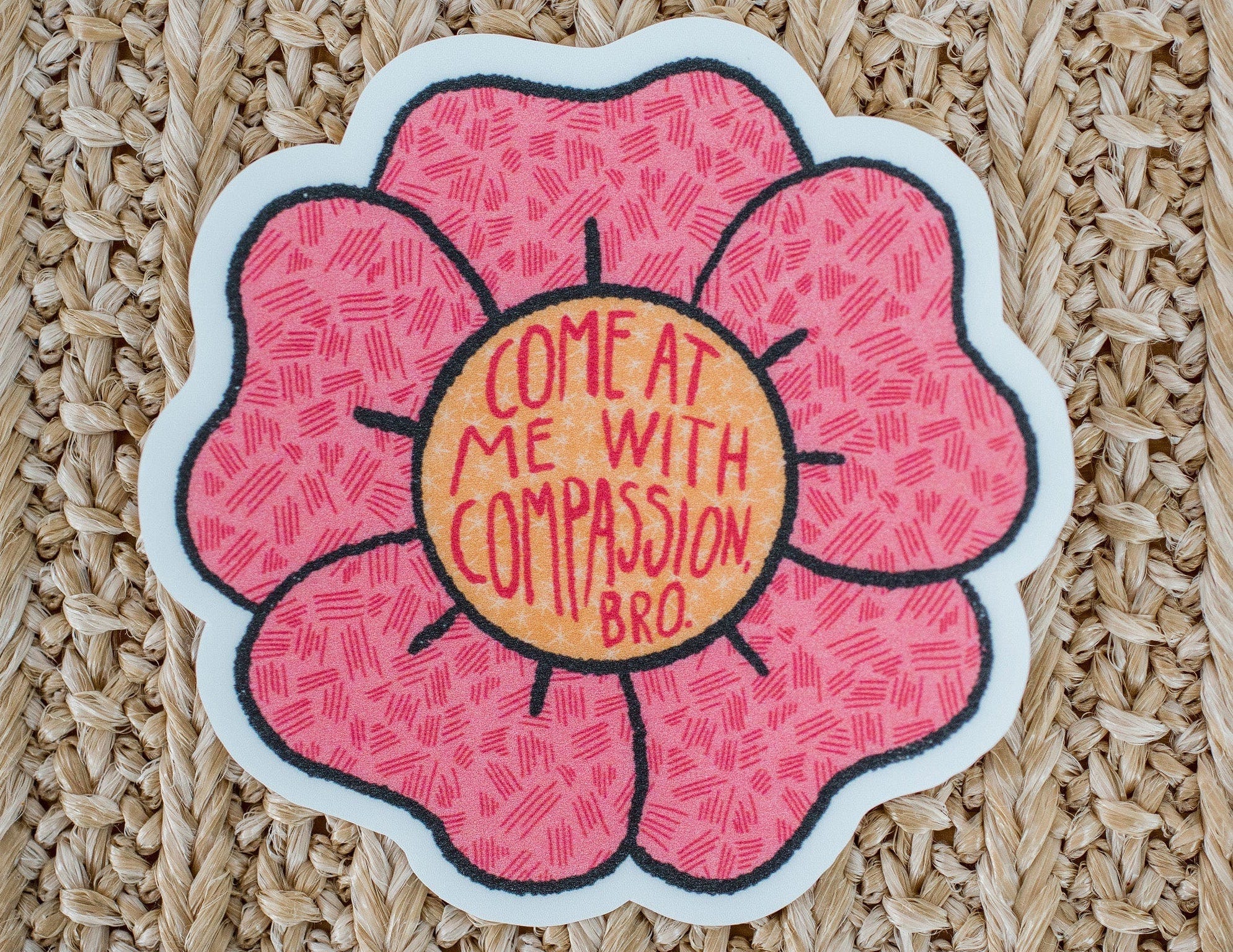
A friend Asked the Hippie Shrink: how can I be compassionate toward my ex?
This comes up a lot with therapy clients as well, especially when someone is coparenting with their ex. Compassion can be hard to come by, especially in the aftermath of a bitter separation. Other clients wonder how to find connection to friends and family whose politics they oppose. What about people we deeply despise?
In Portland, Oregon, a city I have loved and called home for over 20 years, federal troops have been deployed this past week. It’s been a struggle to find compassion, and I’m writing this for myself as well.
From the Buddhist perspective, hate doesn’t do us any good. If nothing else, it keeps us in a state of negativity. Am I suggesting that you shouldn’t get angry? No.
The problem comes from a constant state of anger, irritation, hatred or rage. Have you ever reacted poorly out of anger or hatred? Maybe you sent a text or posted on social media before you’ve had time to cool down. Some of my biggest challenges have been working with clients who have a hard time letting go of hate, and were quick to anger. I witnessed them make the same mistakes, over and over, many of which might have been avoided had they been thinking clearly, without anger or hatred.
Unhappy co-parents can get trapped in anger/hatred cycles. They relate through continual litigation over every aspect of their children’s lives. They come from places of high reactivity, quick to anger at the very thought of their former partner. Hatred, resentment, and continuous anger cause chronic stress that can lead to long-term effects on your mental and physical health (Cleveland Health Clinic, 2023).
Ram Dass said that he kept a photo of Casper Weinberger on his shrine. There are a few reasons I loved learning this. In part, because he was practicing compassion with someone he considered an enemy. Keep your enemies close, indeed. Also, if you’re reading this and you aren’t a student of history, you have no idea who Casper Weinburger is. He was the US Secretary of Defense under Ronald Reagan. This is also a lesson about impermanence, that these incredibly powerful people disappear, and most of us do not remember them.
Compassion can be an antidote to hate and uncontrolled reactivity. How might you find compassion for someone, even if you find them difficult? Even those who have hurt you?
A note about trauma
If the person you identify as an enemy acted violently toward you, give yourself a pass on that one. There might be a time to work with compassion there, but be honest with yourself. It might be easier to work with someone with whom you have some distance.
Metta Practice
In the traditional Buddhist metta meditation, we find compassion first for ourselves, loved ones, strangers, then people we dislike, then all living things. This is a really sweet meditative practice, and helps us soften our approach to this enemy.
Imagine them as a small child
Some people have a hard time picturing their enemy during the metta practice. It might help to imagine this individual as a small child. Before there was conflict, they were a child, full of potential and love. You might connect with that tiny person within them. Perhaps imagine or look at a photo of this person as a child before you text, call, or email.
What’s your role in the conflict?
In conflictual relationships, we need to acknowledge our own failures. This is not to excuse the other’s actions, but it can be helpful to look at our own behavior. Did we overreact, keep score, hold a grudge, or refuse to accept an apology? What did we do to stoke the conflict?
Do we hate the mirror?
Is any of this projection? Perhaps the aspect of this enemy reflects something you dislike in yourself. Is there any one thing that bothers or offends you about them? How much does that trait show up in yourself? If this person does something that reminds you of yourself, you can have compassion because you want both of you to change.
Hope for their confusion to lift
If you have a hard time generating compassion for this person in any other way, maybe all you can do is wish that they weren’t confused. In Buddhist psychology, one of the three poisons is confusion, or ignorance; people suffer because we ignore how things actually are. In Oregon we complain about fall (and winter and spring) rain even though we know that summer ends every year. We ignore the reality of the seasons.
Maybe your enemy is an extremely wealthy person, a billionaire with the OCD-like compulsion to hoard more and more money for themselves. Maybe in some way this billionaire has directly affected your life, like caused you to lose your job. You may hate this person, find there’s nothing redeemable about them. If nothing else, they are very confused. I cannot imagine what might cause them to continue collecting money, but it might be that they misunderstand impermanence.
Their empire will fall; their generational wealth will end up as family squabbling and lawsuits. This billionaire, just like the rest of us, might find themselves in a hospital bed, hooked up to tubes, wearing little more than a sheet; and they will be so angry, so surprised: they worked so hard and it shouldn’t be like this. Their wealth and health should have lasted forever. But it didn’t.
If they weren’t so confused, maybe they would act differently. At a certain point, the dragon becomes so worried about protecting her wealth that she forgets how to fly. This is confusion. Poor dragon. If you cannot find any other form of compassion, wish that this person were not so confused.
But How Can I Protect Myself?
It makes sense that you wear your grudge or hatred like armor. In many cases, it doesn’t do any good: the object of your grudge or hatred might be blissfully unaware. Sometimes we use hate as a charm, to ward off harm from ever happening again.
A different answer here is self-compassion. If you can establish good boundaries with this individual, you have protection. Healthy boundaries come from self-compassion. It could be a lack of self-trust. Maybe you don’t trust yourself not to get hurt again. That twenty-year grudge serves as a barrier, but trust and discernment can work more effectively. Trusting yourself also comes from self-compassion. Any good compassion practice, like the metta meditation, will start with you. The more you trust and love yourself, the easier it will be to create strong boundaries, and the discernment to understand who, what and when to let in.
References
https://www.powerofpositivity.com/hatred-destroys-mental-health/
https://health.clevelandclinic.org/things-stress-can-do-to-your-body
This was very helpful to me this morning as I have a bit of a hangover from watching the news last night. I have been avoiding it but then I realized that it is not responsible to be uninformed.
I did have to read between the lines a bit as I live alone in an isolated place and threats are existential. But this is a red -RED- state so leaving home can bring them to hand at any time.
I make it a daily practice to try stepping back from the content of my experience so our true nature shines. I see that I can apply this to those with whom I am at odds.
I’m grateful for the help.