
Does Psilocybin Help with Creativity?
Maybe it parts the clouds

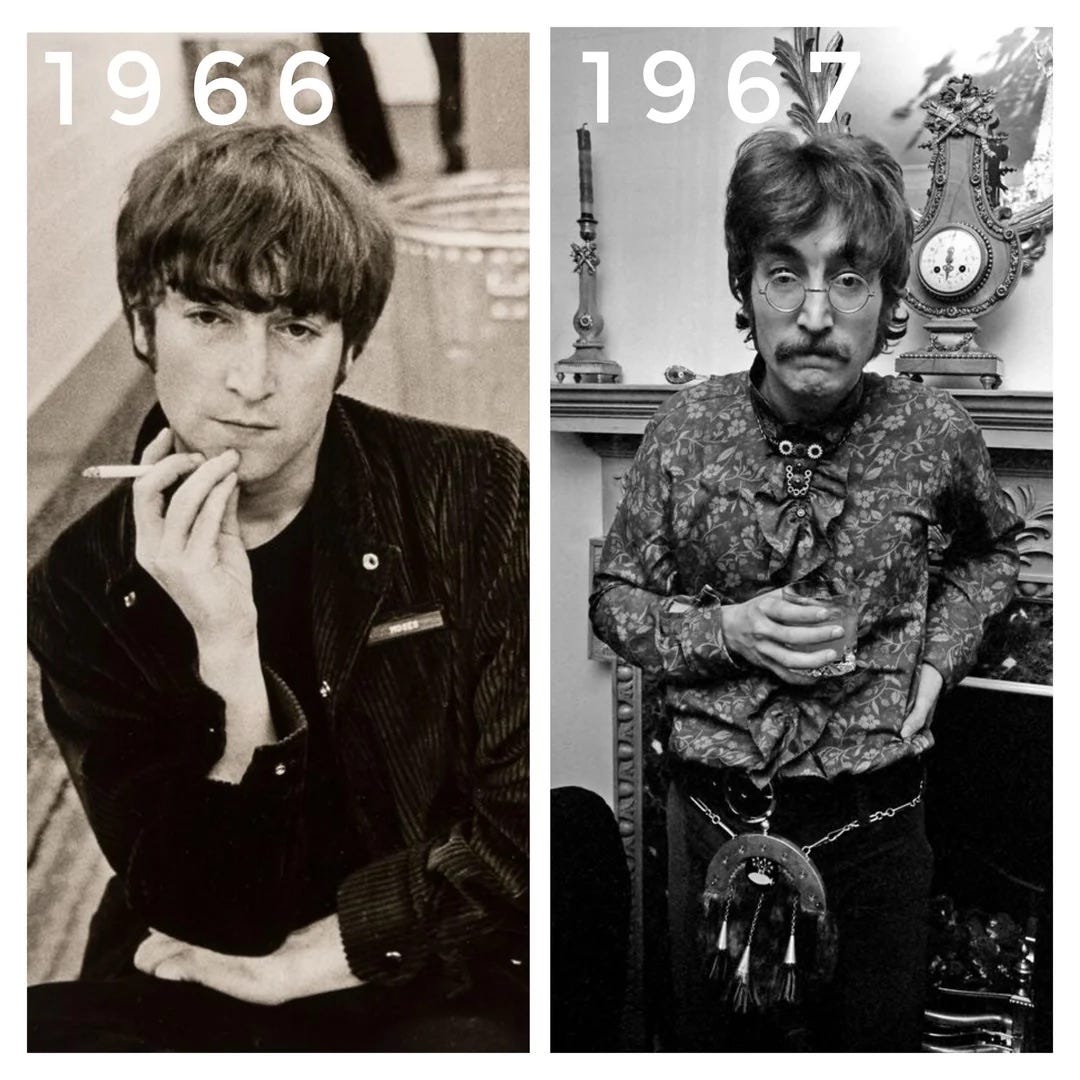
The college dorm argument in favor goes like this: listen to Sgt. Pepper’s Lonely Hearts’ Club Band. The Beatles created this masterpiece during their psychedelic heyday. For a control, you only have to listen to pre-psychedelic Beatles, like Please Please Me. Psychedelic-influenced Beatles is clearly better than the control group. Q.E.D.
What does the research say?
In 1966, the last year that psychedelics were legally available and the Beatles were busy at work on Sgt. Pepper, Dr. James Fadiman (2011) designed a study, and asked several professionals to work on difficult projects while under the influence of mescaline. There were 26 participants, and Fadiman listed some some of the problems solved during the study:
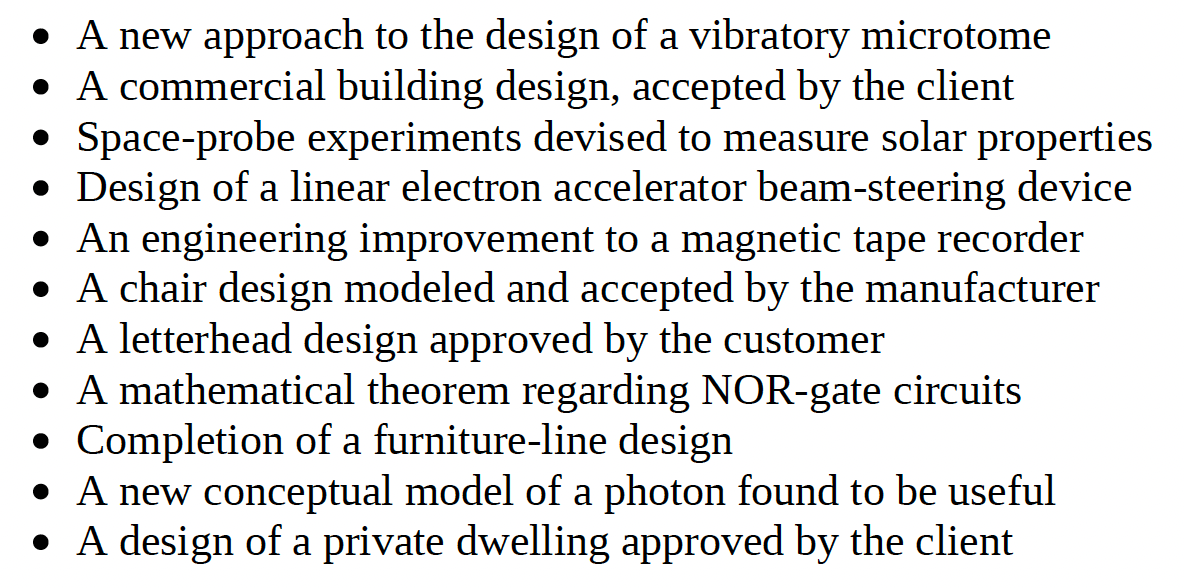
Fadiman concluded that problem-solving increases, and that certain creative tasks improve with psychedelics, while others degrade. He was all set to expand his work, then received the dreaded letter that came that year from the federal government, halting all psychedelic research for several decades.
Renewed Research
In 2021, Mason et. al studied the effects of relatively low dose psilocybin on 60 participants in a double blind, placebo experiment. They discussed two different aspects of creativity: divergent thinking (DT) and convergent thinking (CT). Put simply, DT is about idea generation, and CT is idea evaluation, or understanding are all these ideas any good? Participants noted an increase in DT, even seven days after the experience (Mason et. al, 2021). Their ability to evaluate these ideas, or CT, decreased while using the substance.
Costa (2023) reviewed the above study and several others, and concluded that changes in CT and DT were a mixed bag, and that there was not enough support in research to suggest real, meaningful connections between psychedelics and these creative processes.
Beyond the research
I’m writing this as a psychonaut, as well as a writer and musician. Since my own creativity has been focused on writing for many years, I’ll use that when I discuss creativity. Also, as I work as a psilocybin facilitator, I will mostly discuss that substance, though I know many people have noticed increased creativity with LSD, ketamine, and other substances.
There are many factors around creativity beyond the brain processes mentioned above, some of which have not been vigorously studied, but appear to affect creativity: focus, perspective shifts, energy, and a lack of ego.
Novel Perspectives
You might experience novel perspectives and make connections that might not otherwise appear. In one trip, I experienced my childhood from the point of view of my mother. Harrowing. It was also beautiful. This first person/third person shift might not have come to me otherwise, at least not so effortlessly. Some of the memories that showed up with my mother’s perspective were moments I’d forgotten about, and I wrote an almost fully fleshed out essay about my childhood in the days after that experience. When I was in Jamaica for a psychedelic training, after a trip I wrote a meditation for chronic pain, which I have shared with clients since.
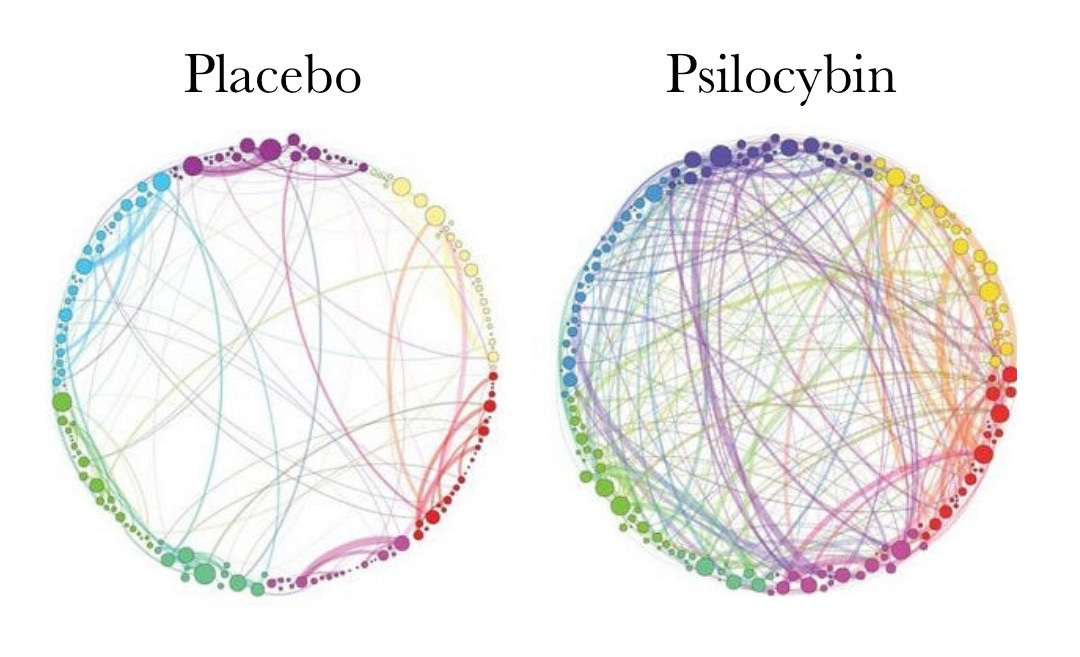
The diagram above attempts to map how we understand what happens to a brain during a psilocybin journey. I think of this as an airline map, where local neural connections are like close cities. Most of the time our brain is flying on routes from Seattle to Portland, or New York to Boston. During a psilocybin experience, we’re flying from Greenland to Jakarta, or South Africa to the insides of our mitochondria. These novel neural couplings can offer new connections that help coax our muse.
Suspending Ego
After a psilocybin experience, ego might well fuck off for a while. This is such a delight in generative writing. It has been documented many times that the default mode network, which supports rumination, is diminished both during and after a psychedelic experience. I spent a good four years of my adult life writing every day, for several hours, after my novel Captain Freedom was published. Even after I’d done the hard thing – sold a novel – every day I was tormented by the common gremlins: will anyone want to read this? This is dumb, isn’t it? That’s the wrong word. You don’t know how to say what you mean. What’s the market for this work? You’ll never be successful. Why don’t you take a break, eat a snack, go to the gym, take the dogs for a walk, literally do anything else?
This litany will appear familiar to many writers. It’s an onslaught of negativity coming from the default mode network. If you think you have managed your negative self-talk, try writing a book.
Ego is sent to the back of the line during a psilocybin trip, and for many of us, it can be a while, two or three weeks, before typical thought patterns come back. This is a wonderful time to explore, to write without fear. When I originally worked on my chronic pain meditation, I wasn’t concerned with the typical critical thoughts my ego brings: who do you think you are? This metaphor doesn’t work. This is too trite, too woo-woo, you wrote it in Jamaica after a mushroom trip, can you get any more ridiculous?
If those thoughts were in the forefront I would never have started the project.
Increased Energy
Many people who experience psilocybin when working with their depression notice an increase in energy after their journey. That lifting energy, which often lasts long after the psilocybin has left the body, can be crucial in changing peoples’ lives. You can do a lot once you feel like you can get out of bed in the morning.
In the same way, that energy can help artists move into their work. It might not be inspiration per se, but rather the motivation, which for many artists is hard to come by (see previous comment about depression).
Focus
Sometimes people jump right back into their old routine after a psychedelic experience, and the next day they find themselves back online, fighting with their relatives on Facebook. After a journey ends, I encourage people to move back into their typical days as slowly as they can.
Many of us feel a sense of spaciousness after a trip. If we fill that all back up with the busy tasks of everyday life, we lose a lot from the trip. If we heed that new experience of space, we might notice that our old patterns are not so enticing. You aren’t sweating the small stuff. That newfound space might mean that you don’t pick up your phone as soon as you wake up. Perhaps you grab your journal and write for twenty minutes.
Inspiration, Move Me Brightly
Some psilocybin experiences reveal moments of awe. Awe as in you experienced something so beautiful and huge you cannot help but feel inspired. Inspiration can come in so many forms, not just a psychedelic experience. Contemplating the rough ocean. Listening to a moving piece of music, with your eyes closed, without distraction. Looking at art. Talib Kwali rapped “I draw on anything for inspiration/ A fond memory, a piece of paper, walls in a train station.” That sounds like someone in touch with their sense of awe.
Focus and energy help our creative process, even if they aren’t themselves creative mechanisms. The ability to sit down and knock out a few thousand words every day, ego free, for a few weeks after a psilocybin trip is something many creatives would kill for.
References
Costa, M. Â. (2023). A dose of creativity: An integrative review of the effects of serotonergic psychedelics on creativity. Journal of psychoactive drugs, 55(3), 299-309.
Fadiman, J. (2011). The psychedelic explorer’s guide: Safe, therapeutic, and sacred journeys. Simon and Schuster.
Mason, N. L., Kuypers, K. P. C., Reckweg, J. T., Müller, F., Tse, D. H. Y., Da Rios, B., ... & Ramaekers, J. G. (2021). Spontaneous and deliberate creative cognition during and after psilocybin exposure. Translational psychiatry, 11(1), 209.